

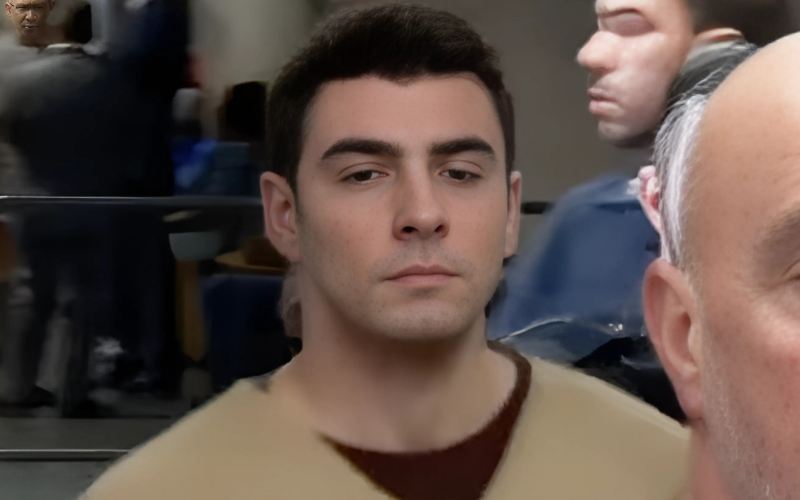
A New York judge has thrown out state-level terrorism charges against Luigi Mangione, the 27-year-old accused of killing former UnitedHealthcare executive Brian Thompson in Manhattan last December. While the ruling represents a significant legal victory for Mangione, it does not absolve him of the far more serious criminal charges he still faces, including second-degree murder.
Mangione, who allegedly shot Thompson outside a Manhattan hotel where the executive was attending a conference, had been indicted on multiple counts, including murder and terrorism under New York law. Prosecutors argued that his actions were ideologically motivated, citing Mangione’s writings, including diary entries and slogans scrawled on ammunition, which expressed deep resentment toward the health insurance industry.
New York Judge Dismisses Terrorism Charges Against Luigi Mangione
On September 16, 2025, Justice Gregory Carro ruled that the evidence presented to the grand jury was insufficient to sustain terrorism charges. The judge emphasized that New York’s terrorism statute requires proof that a defendant intended to intimidate a civilian population or coerce government policy. While Mangione’s writings showed animosity toward the health care industry, the court determined they did not meet the legal threshold for terrorism.
“This ruling does not mean the state cannot pursue other serious charges,” the judge noted. “It merely clarifies that the specific intent required under the terrorism statute has not been established.”
Although the terrorism counts have been dismissed, Mangione still faces multiple charges in state court, including second-degree murder, weapons possession, and false identification. Conviction on these charges could still carry life imprisonment. At the federal level, prosecutors continue to pursue a separate case, which could result in the death penalty if Mangione is convicted.
Legal experts say the dismissal underscores the high bar for terrorism charges under state law. “Not every ideologically motivated killing qualifies as terrorism,” said a criminal law analyst. “The prosecution must demonstrate that the act was intended to instill fear or coerce a broader population or government, and that standard is very strict.”
Mangione’s defense hailed the decision as a vindication, arguing that the prosecution overreached by labeling the killing as terrorism. “The court recognized what we have been saying all along: expressing anger or frustration toward a corporation does not make someone a terrorist under the law,” a defense spokesperson said.
The next pretrial hearing for Mangione’s state charges is scheduled for December 1, 2025. Meanwhile, the federal case continues to loom, keeping Mangione’s legal future uncertain. Public attention remains high, in part because of the case’s unusual mix of violence, ideological motivation, and the symbolic nature of Mangione’s writings.
While the terrorism charges may be gone, Mangione’s alleged actions and the broader implications of the case continue to provoke debate about the intersection of criminal law, ideology, and intent. Legal observers warn that tomorrow’s headlines will likely focus on the ongoing risk, the federal case, and the strategies both sides are preparing for what is expected to be a closely watched trial.
