

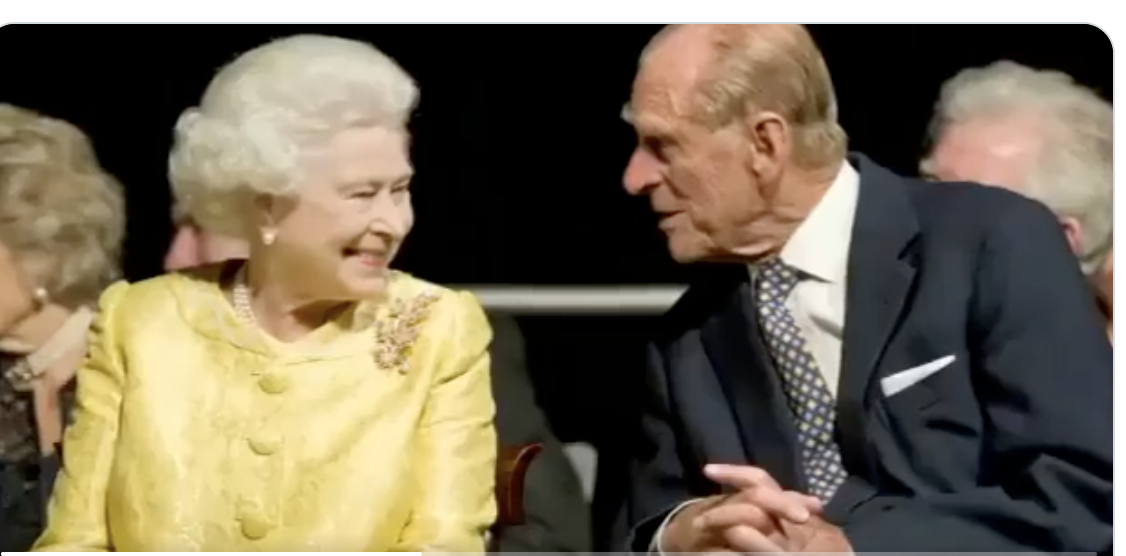
The spring of 2021 carried a profound quietude to Windsor Castle, a silence that descended with the passing of Prince Philip, the Duke of Edinburgh. After weeks of unwavering presence by his wife’s side, a vigil born of their enduring seven-decade love story, the 99-year-old Duke slipped away in his sleep on April 9th. While Queen Elizabeth II had been resolute in her desire to be with him in his final moments, the swiftness of his departure meant she did not awaken in time for a final goodbye, a poignant detail that underscores the delicate and often unseen realities of even the most public lives.
The Unheard Last Words: Prince Philip’s Peaceful Passing and the Queen’s Missed Farewell
This intimate glimpse into the royal family’s private grief comes from Gyles Brandreth, a unique confidante and biographer who paints a portrait of a man both accepting of his mortality and deeply cherished by his Queen. In his book, “Elizabeth: An Intimate Portrait,” Brandreth reveals Philip’s pragmatic and characteristically unvarnished view of death. “‘Death is part of life,'” the Duke had told him with a characteristic chuckle. “‘You’ve got to face it. You’ve got to accept it – with a good grace. When you get to my age, there’s a lot of it about.'”
For Philip, death was not an abstract concept. His life had been punctuated by loss from an early age – the assassination of his grandfather, the tragic plane crash that claimed his beloved sister Cécile, the premature deaths of his father and his influential uncles, George Milford Haven and Lord Mountbatten. Perhaps these experiences fostered a certain stoicism, a readiness for the inevitable. “‘I’m quite ready to die,'” he confided in Brandreth. “‘It’s what happens – sooner or later. I certainly don’t want to hang on until I am 100, like Queen Elizabeth [the Queen Mother]. I can’t imagine anything worse. I have absolutely no desire to cling on to life unnecessarily. Ghastly prospect.'”
While Philip approached his own end with a certain acceptance, his passing undeniably left a profound void in the life of the woman who had called him her “strength and stay.” Prince Andrew, speaking on behalf of the Queen in the days following his father’s death, described her grief as a “huge void.” Yet, in typical royal fashion, she met her bereavement with remarkable fortitude, a stoicism that had defined her long reign.
The Duke of York also shared that the Queen had described Philip’s peaceful death at home as a “miracle,” a sentiment likely referencing the relief that he did not pass away alone in a hospital under the strict COVID-19 regulations of the time. Sophie, then the Countess of Wessex, echoed this sentiment after attending a Windsor church service, describing Philip’s passing as “so gentle,” like “somebody took him by the hand and off he went. Very, very peaceful, and that’s all you want for somebody, isn’t it? I think it’s so much easier for the person that goes than for people that are left behind.”
The image of the Queen, forced to navigate the public mourning and the intimate grief under the isolating constraints of the pandemic, was deeply poignant. At Philip’s funeral, a stark symbol of the era, she sat alone in St. George’s Chapel, a solitary figure in black, separated from her family by social distancing.
Angela Kelly, the Queen’s senior dresser, offered a quiet testament to the Queen’s private grief. Upon her return to her apartment after the funeral, “I helped her off with her coat and hat and no words were spoken. The Queen then walked to her sitting room, closed the door behind her, and she was alone with 1 her thoughts.”
Though the Queen’s missed final farewell to her husband adds a layer of heartbreaking intimacy to his passing, Brandreth’s account underscores Philip’s own readiness for the end. He faced death not with fear, but with a pragmatic acceptance shaped by a life lived fully and a deep understanding of its cyclical nature. While the Queen was denied a final conscious goodbye, the decades of shared life, the unspoken understanding between them, and Philip’s peaceful departure at home offer a different kind of solace – a quiet ending for a man who was, in his own way, “quite ready to die.”
